Building connected communities - reflections from the CFANZ Conference 2026

At its heart, this year's CFANZ conference was about what it takes to build connected communities. The research is clear that social cohesion in Aotearoa is fraying, and community foundations sit in a unique position to help rebuild it. Where social cohesion exists, giving and philanthropy thrive, and communities grow stronger and more connected as a result.
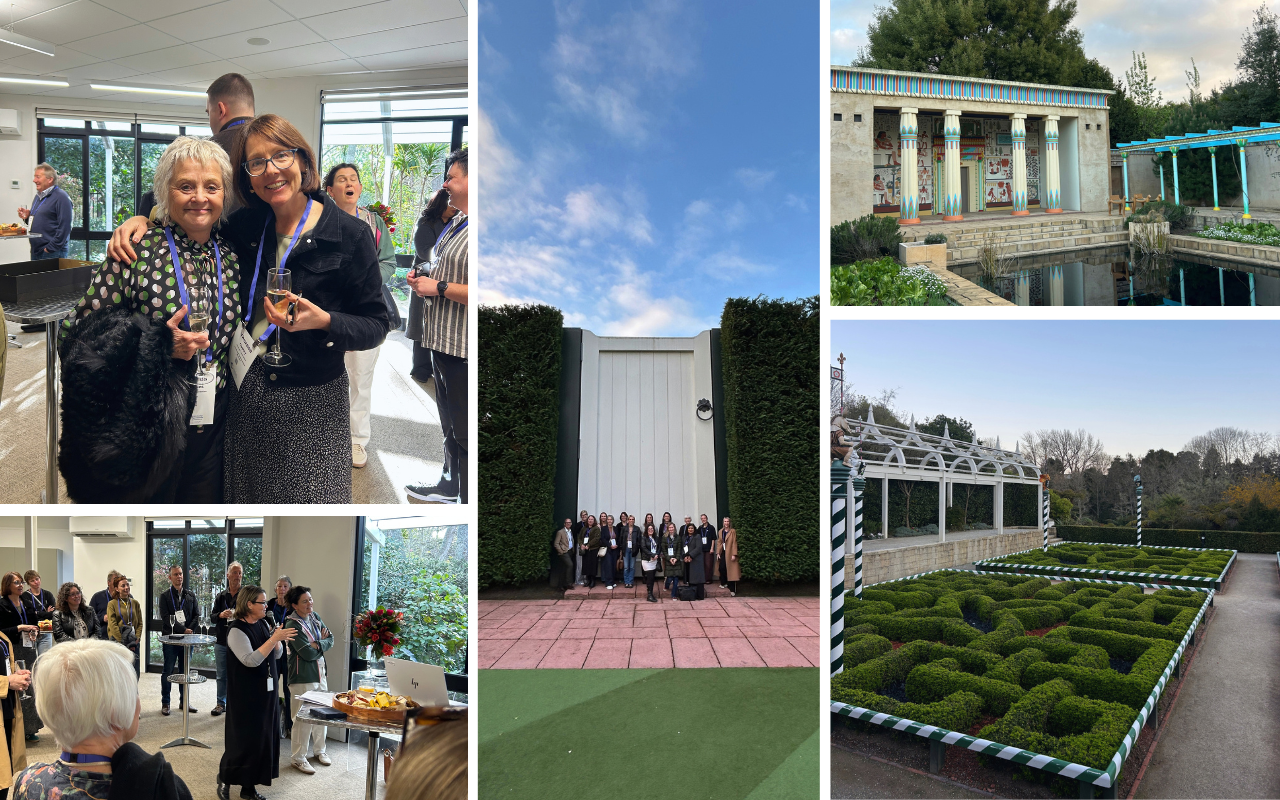
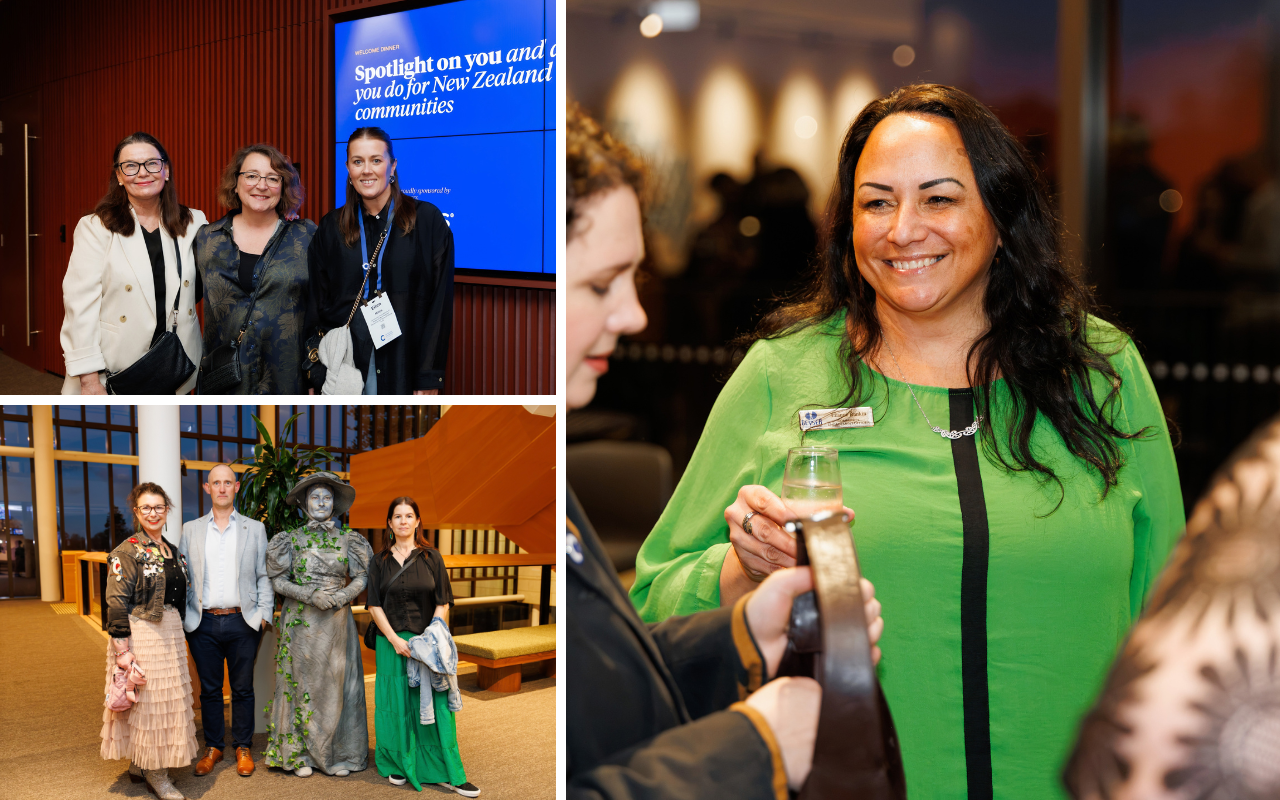
Our welcome function was held at Hamilton Gardens, a living museum spanning more than 4,000 years of civilisation, each garden reflecting a different culture and era. It felt like the right place to start, because the work of community foundations is really about how people have always found ways to seek shelter, calm and belonging together, across every era of human history.
Creativity as the connective tissue
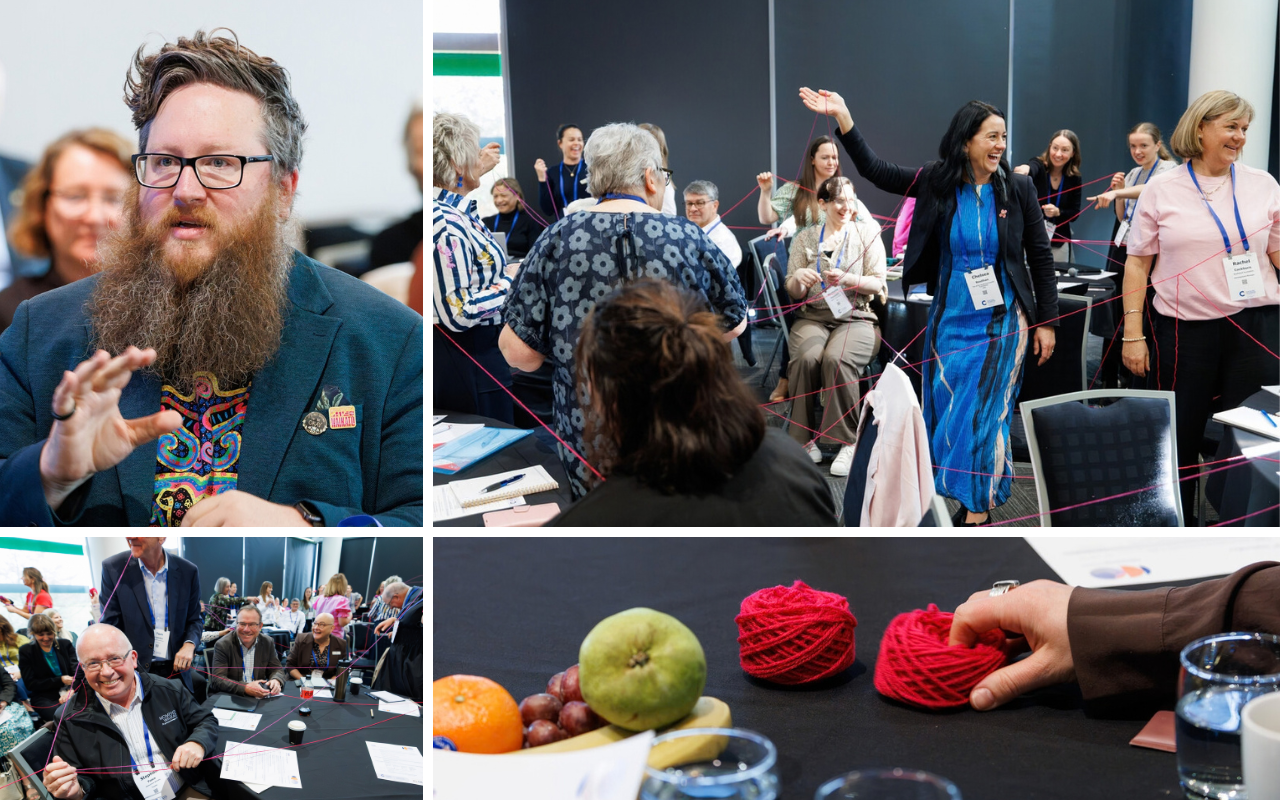
Dr Jeremy Mayall, CEO of Creative Waikato, set the tone early with a simple but firm message: creativity is central to being human, not a "nice to have." Building connected communities means embedding at least two hours of creative pursuit into our lives each week, and investing in the creative arts within our communities if we want genuine cohesion and generosity to flourish.
What the research is telling us
Lori Luke and Eleanor Cater explored the international research showing that the world needs more civic leaders, not just philanthropists, and the strong link between community belonging and generosity. Eleanor shared some of the topline findings from the BERL Giving in Aotearoa NZ 2026 research, including proximity as a core driver of giving, the influence of cultural and faith-based attitudes, and the dislike New Zealanders feel toward the word "philanthropy" itself.
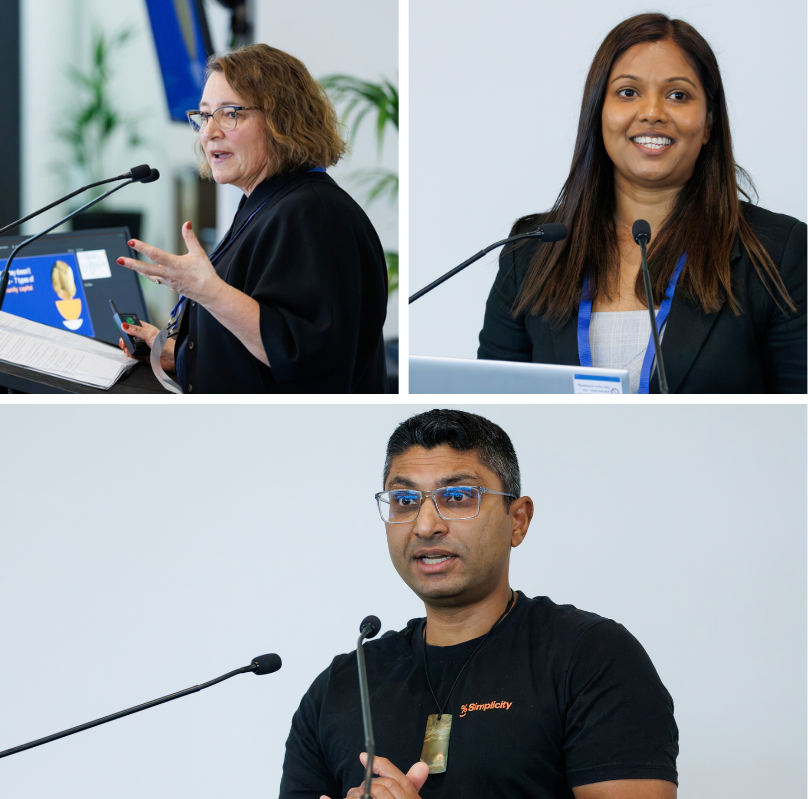
Economist Shamubeel Eaqub followed with his characteristically blunt take on the pace at which our social cohesion is declining, and Jenny Nand and the Waikato Intercultural Fund shared what they are doing locally in response, exploring interculturalism and the depth of relationships between diverse peoples in our communities.
Te ao Māori and the long view
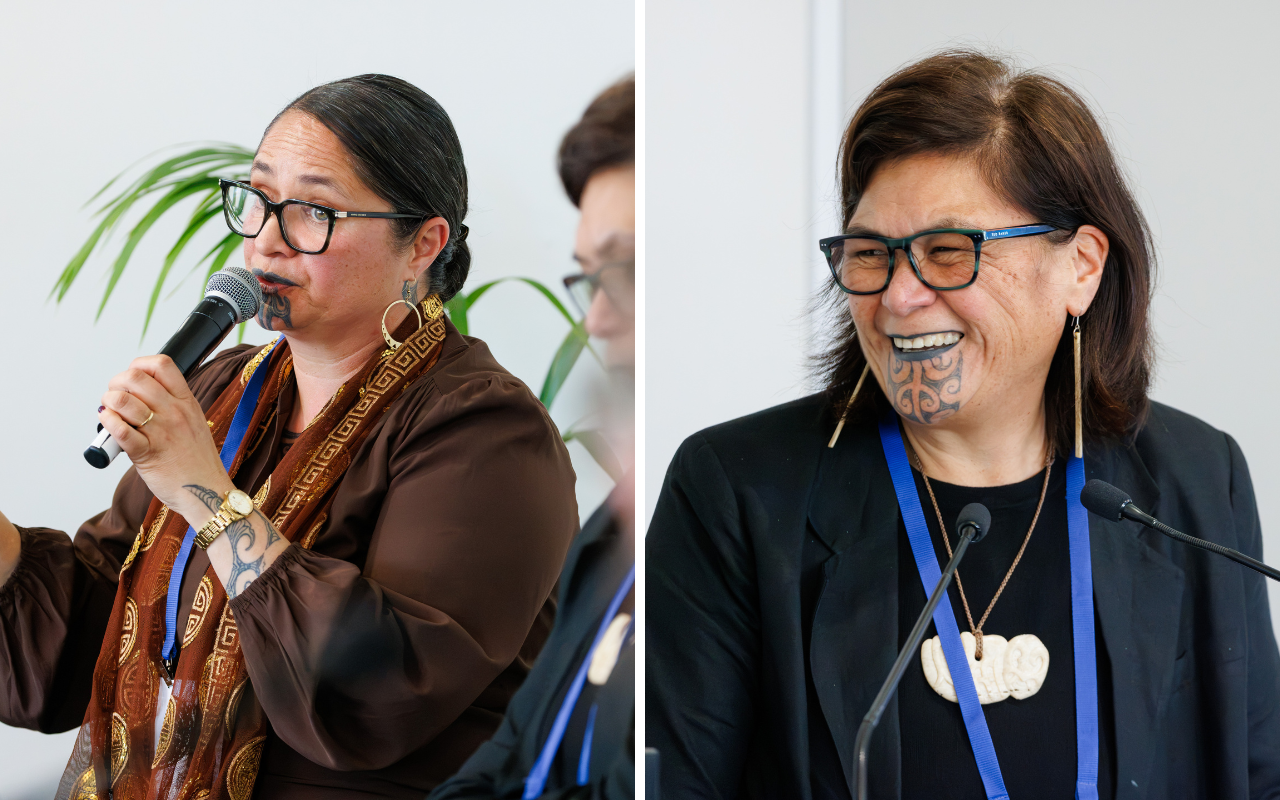
Hon. Nanaia Mahuta challenged us to build an economy "not just for today's consumption but with mokopuna in mind," joined by Maria Huata, who offered what may have been the most poignant moment of the hui: the dynamic between aroha, maia and manaaki, and how "cousin maia (courage) gets aroha over the line." Their invitation was clear - find the kaupapa that matters to Māori and invest in it, because when Māori communities succeed, we all benefit.
Breakouts, innovation and ten years of CFANZ
Breakout sessions covered a wide range of ground: shifting away from traditional funding practices, impact investing, working in partnership with wealth advisors, and the perennial challenge of scaling a community foundation - the "8 x 8 rug in the 10 x 10 room." Innovation sound bites from regional foundations gave a glimpse of what's emerging in community-led solutions across the network.
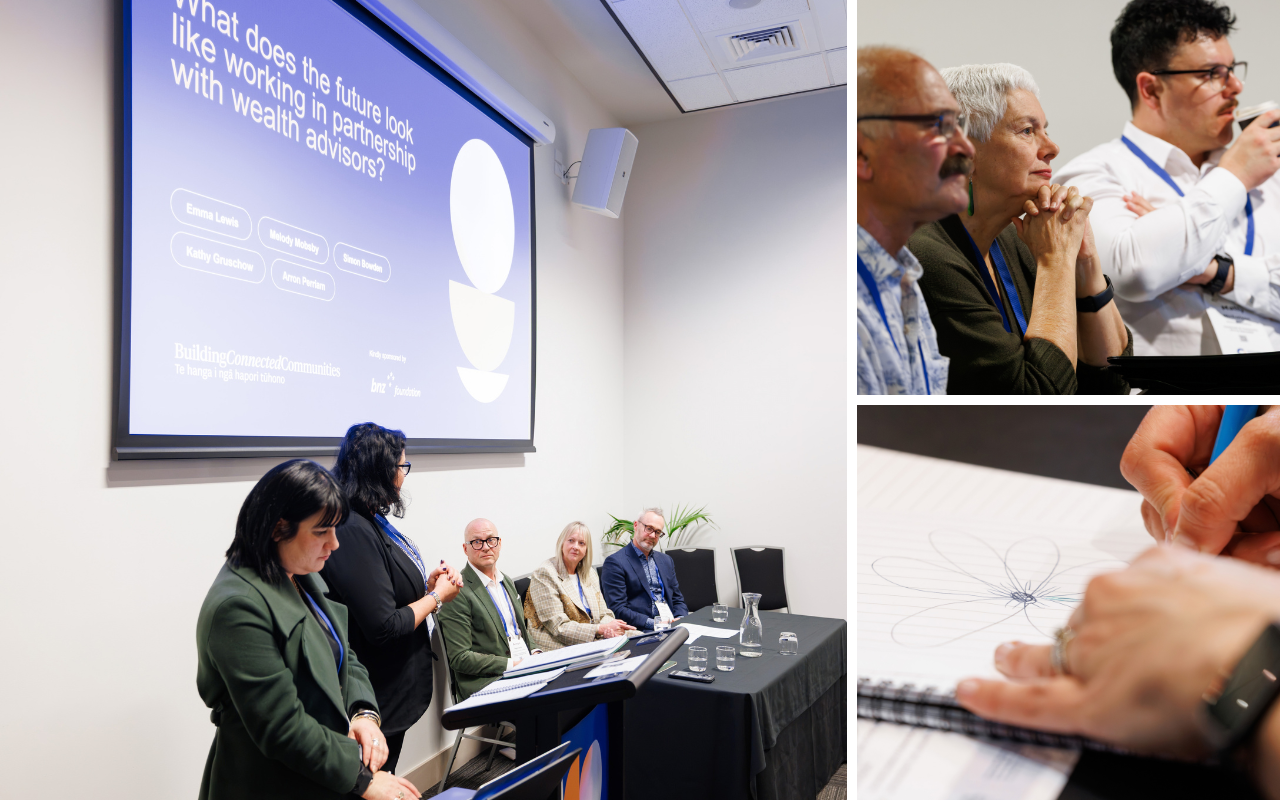
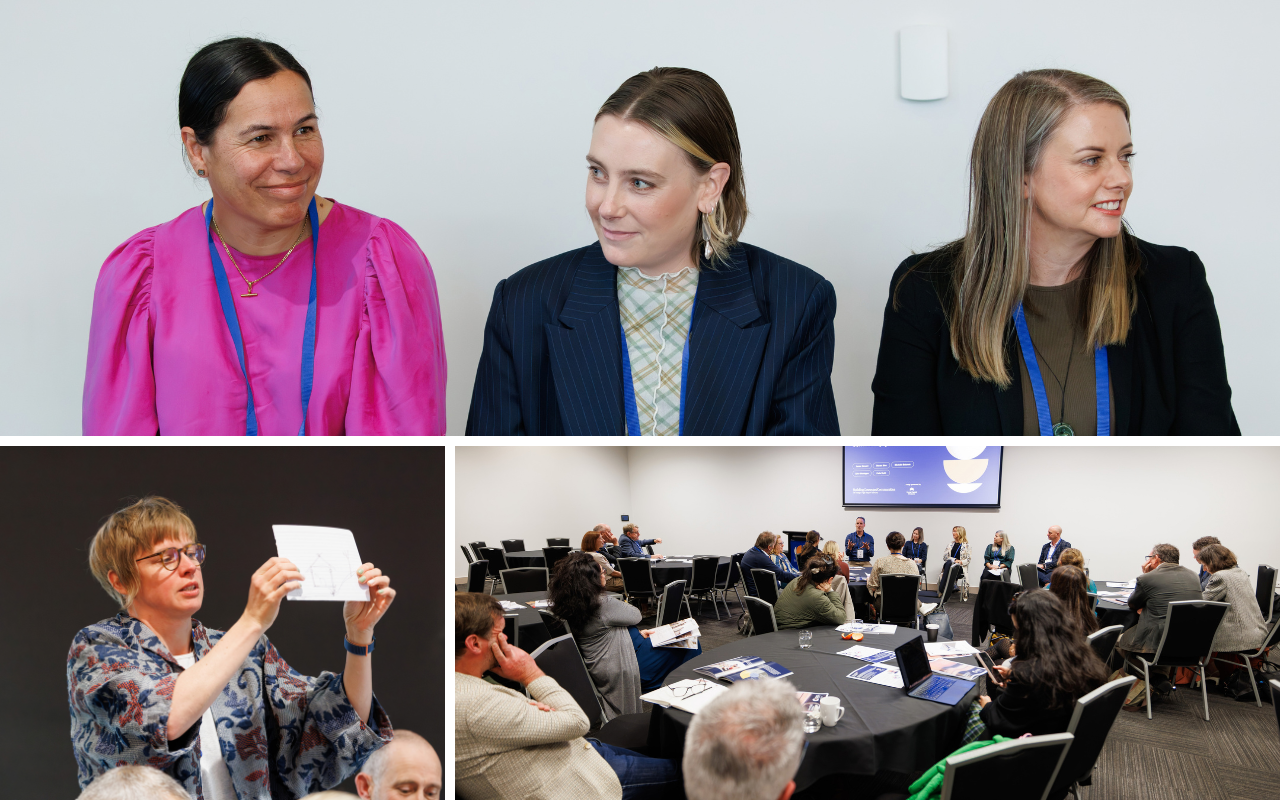
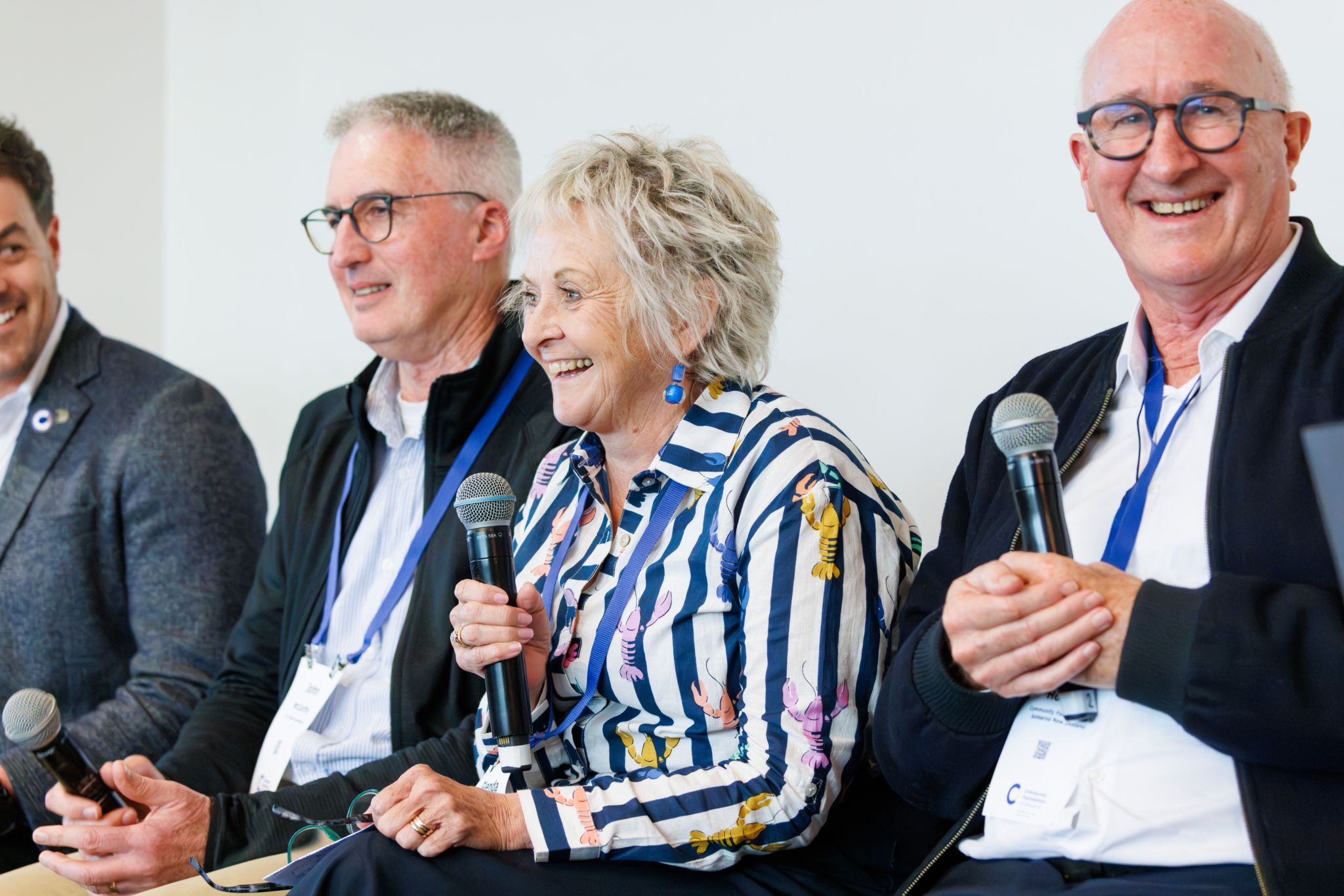
To close day one, Eleanor reflected on ten years of CFANZ and asked CFANZ members to consider what New Zealand needs us to be: is it enough to be facilitators of well-meaning generosity, or should we be purposefully building cohesive communities and tackling the entrenched challenges on our doorstep? Bill Holland, John McCarthy and Glenda Stokes, who were part of the original conversation that founded CFANZ, shared their own reflections and hopes for what comes next.
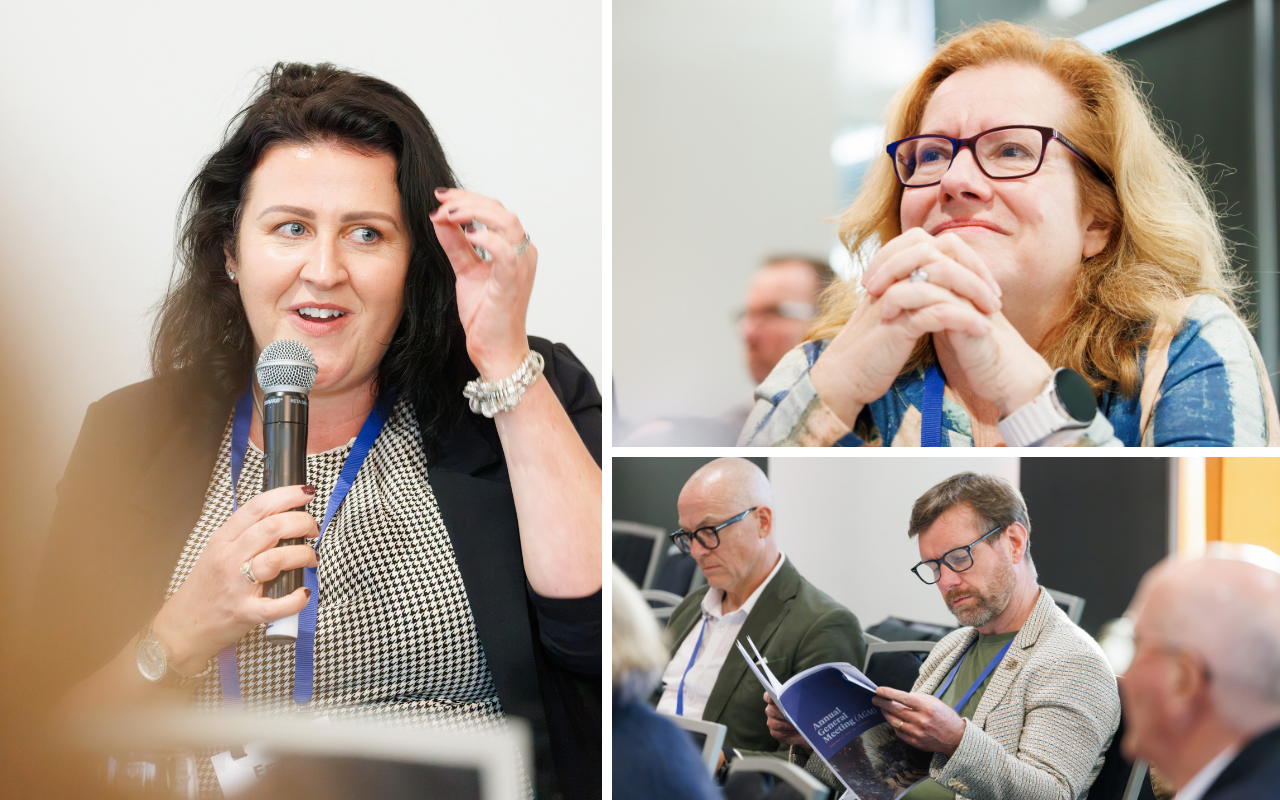
The AGM brought a changing of the guard: Emma Lewis and Josh Hickford elected as Chair and Deputy Chair, and Alex Hannant and Richard Ayton joining the CFANZ board. Lori Luke was farewelled after eight years of service, having reached her maximum four terms - we will miss you, Lori!
Conference dinner: a stage for civic leadership
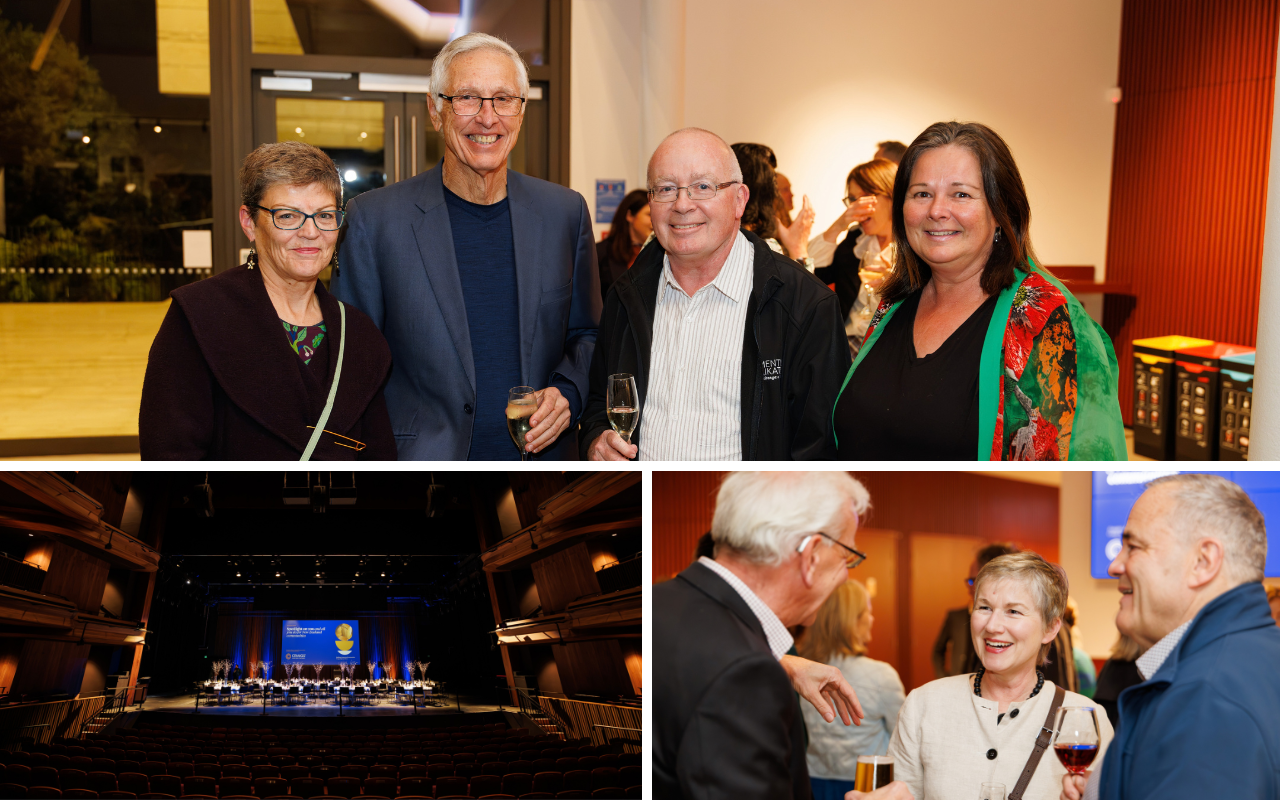
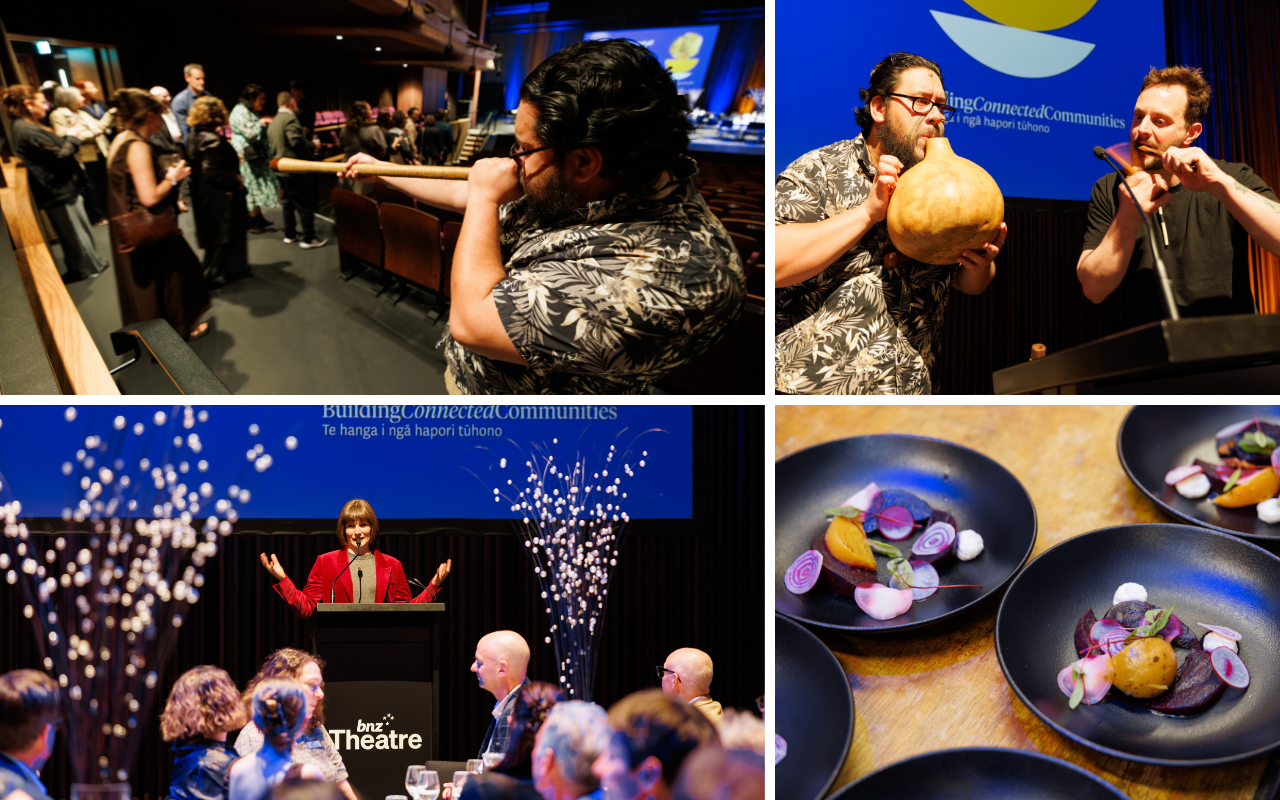
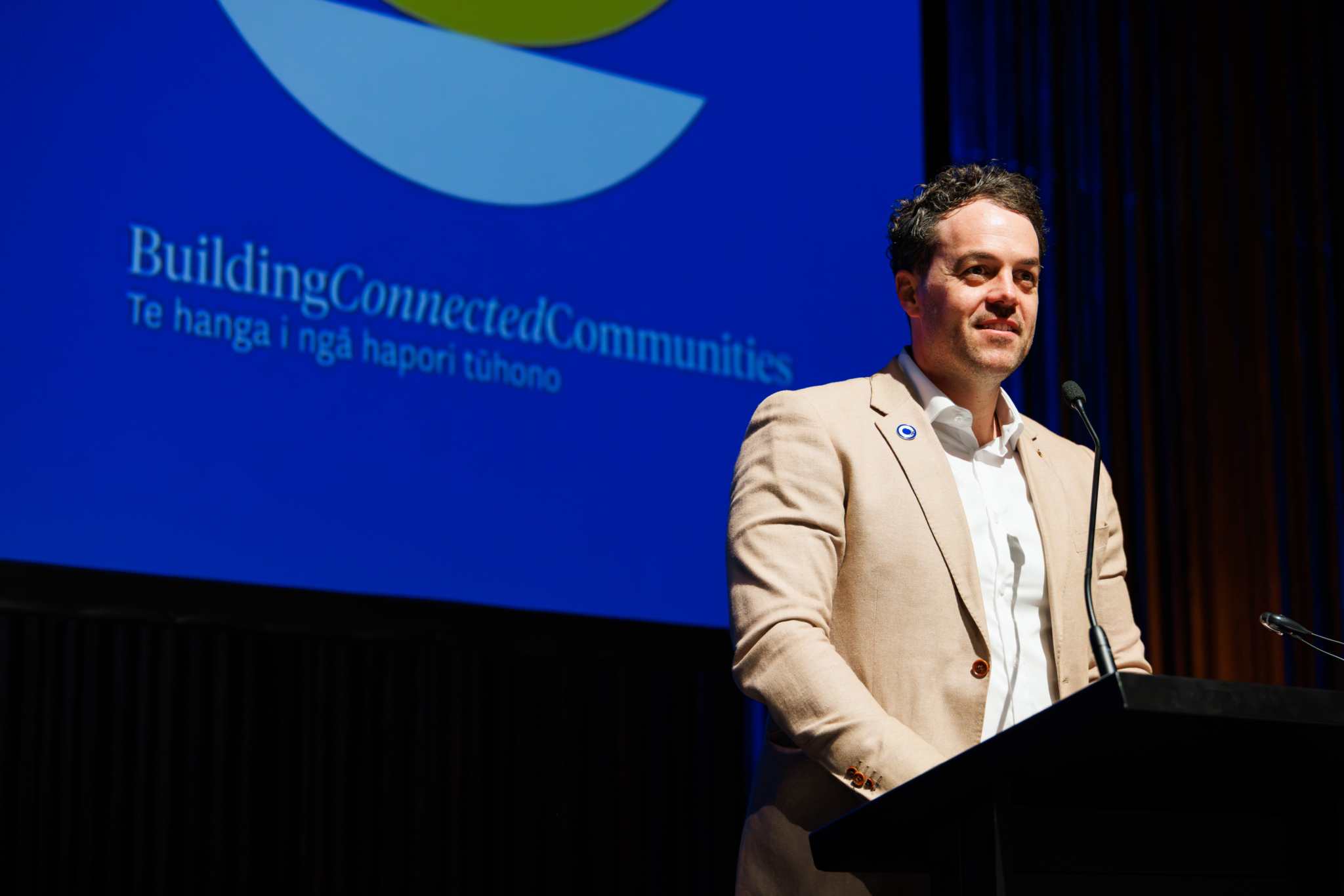
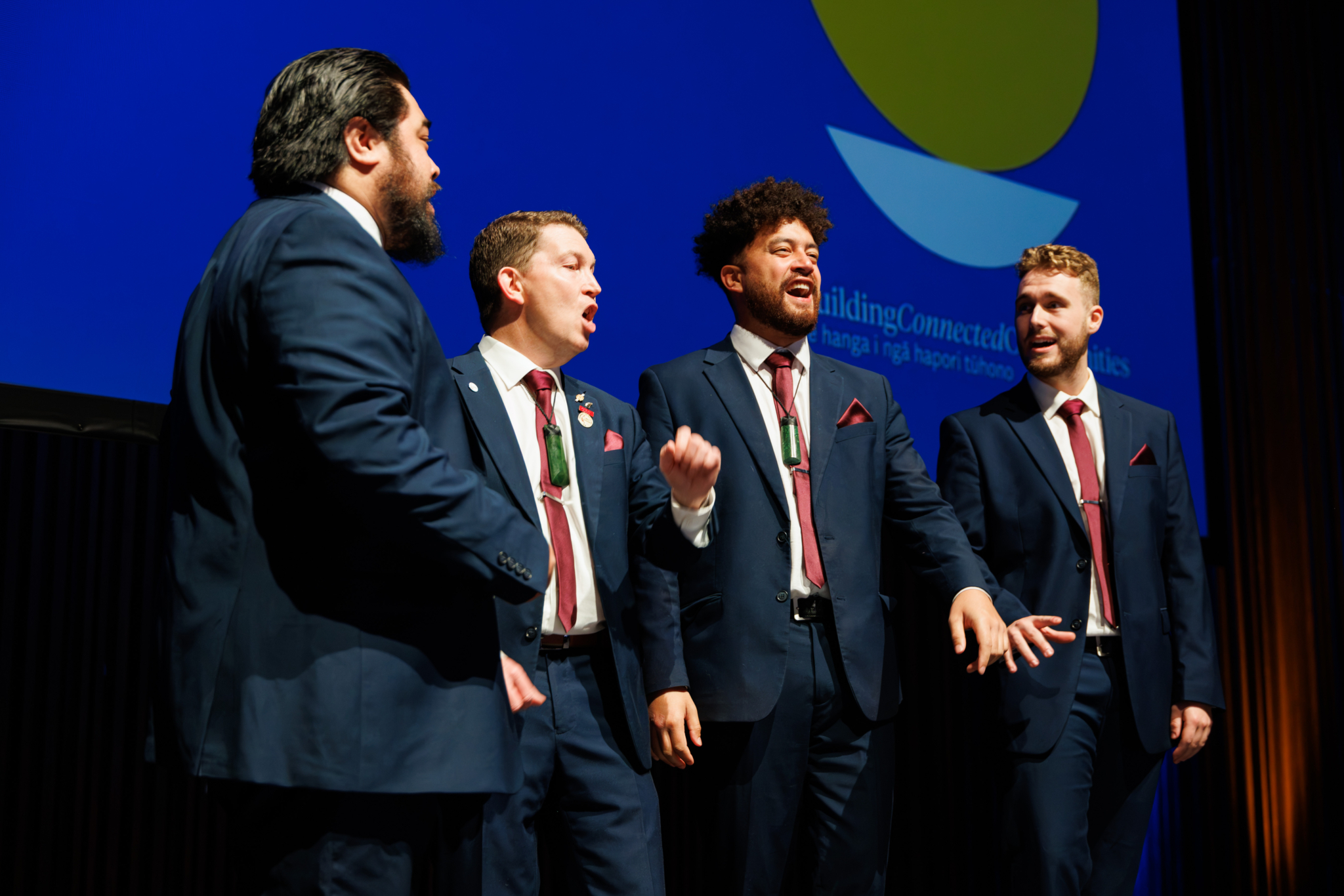
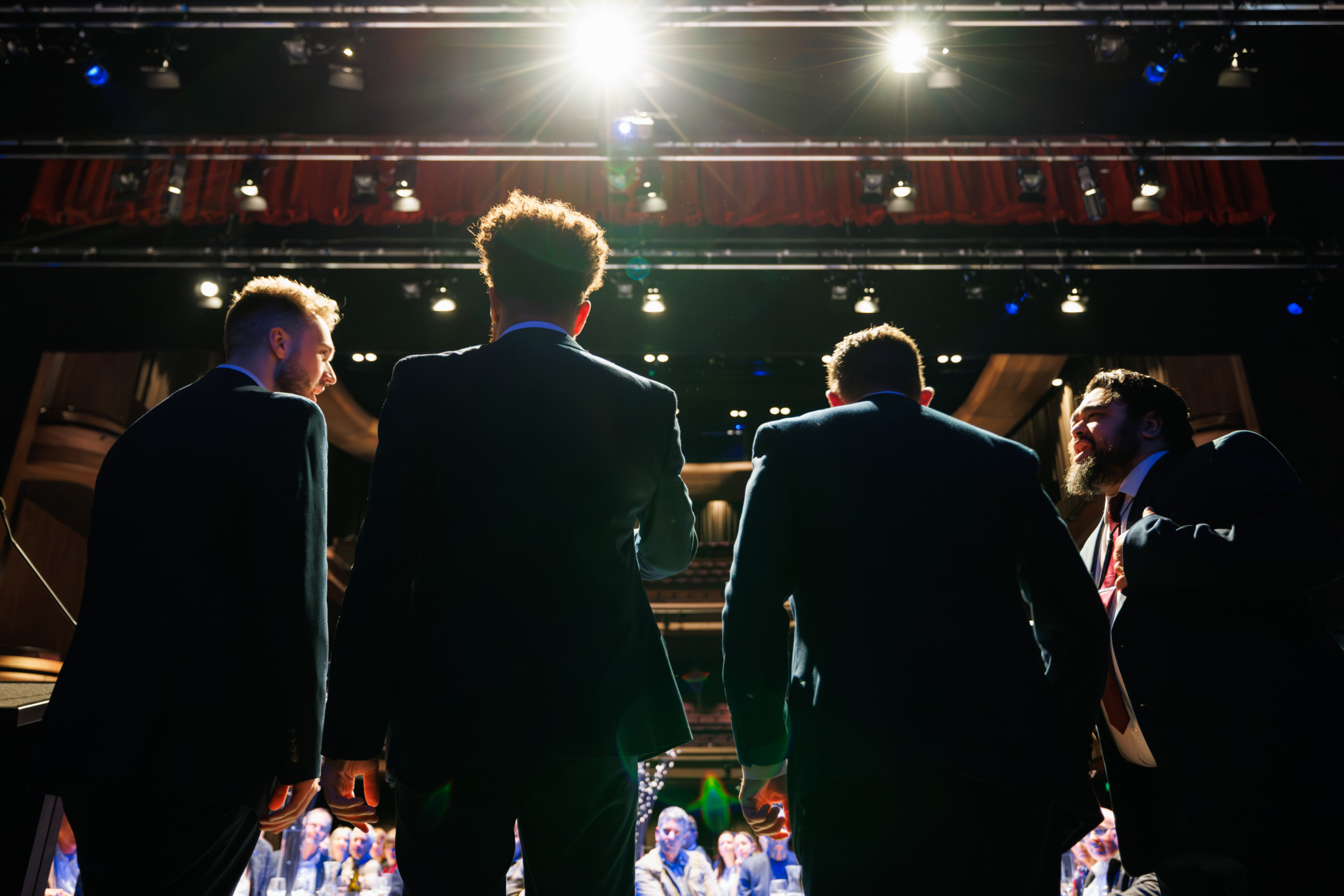
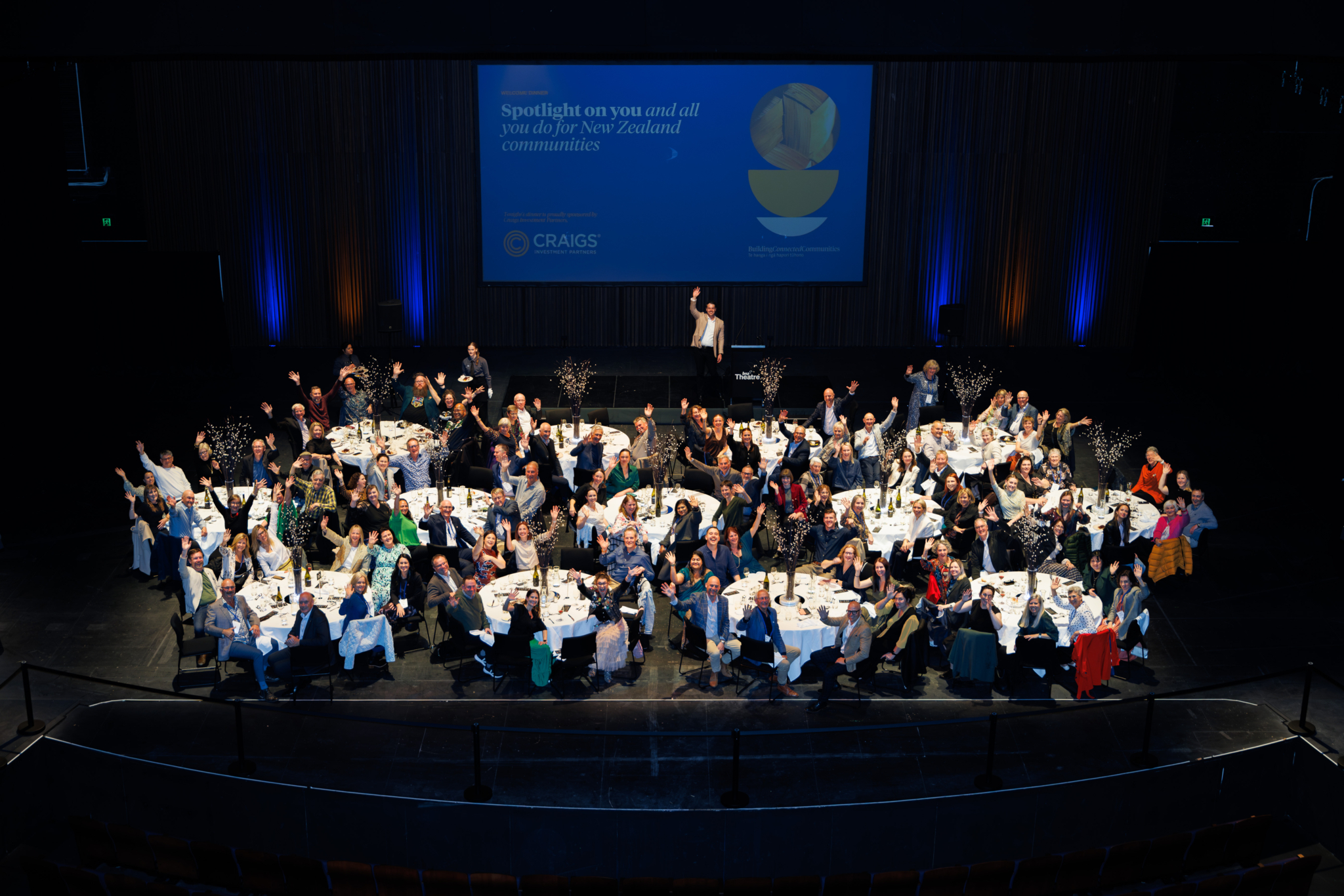
The conference dinner was held at the BNZ Theatre, a project taken on by Momentum Waikato Community Foundation after the old Founders Theatre closed due to seismic risk. Themed "Spotlight on you and all you do for New Zealand communities" and sponsored by Craigs Investment Partners, the evening featured taonga puoro and an award-winning a cappella barbershop quartet, The Usual Suspects. Former Momentum Waikato Chair Leonard Gardner closed the night with the incredible story of the theatre itself, framed around civic leadership and the convening role that a local community foundation can play in bringing people together around creativity and the arts.
Shaping AI for good
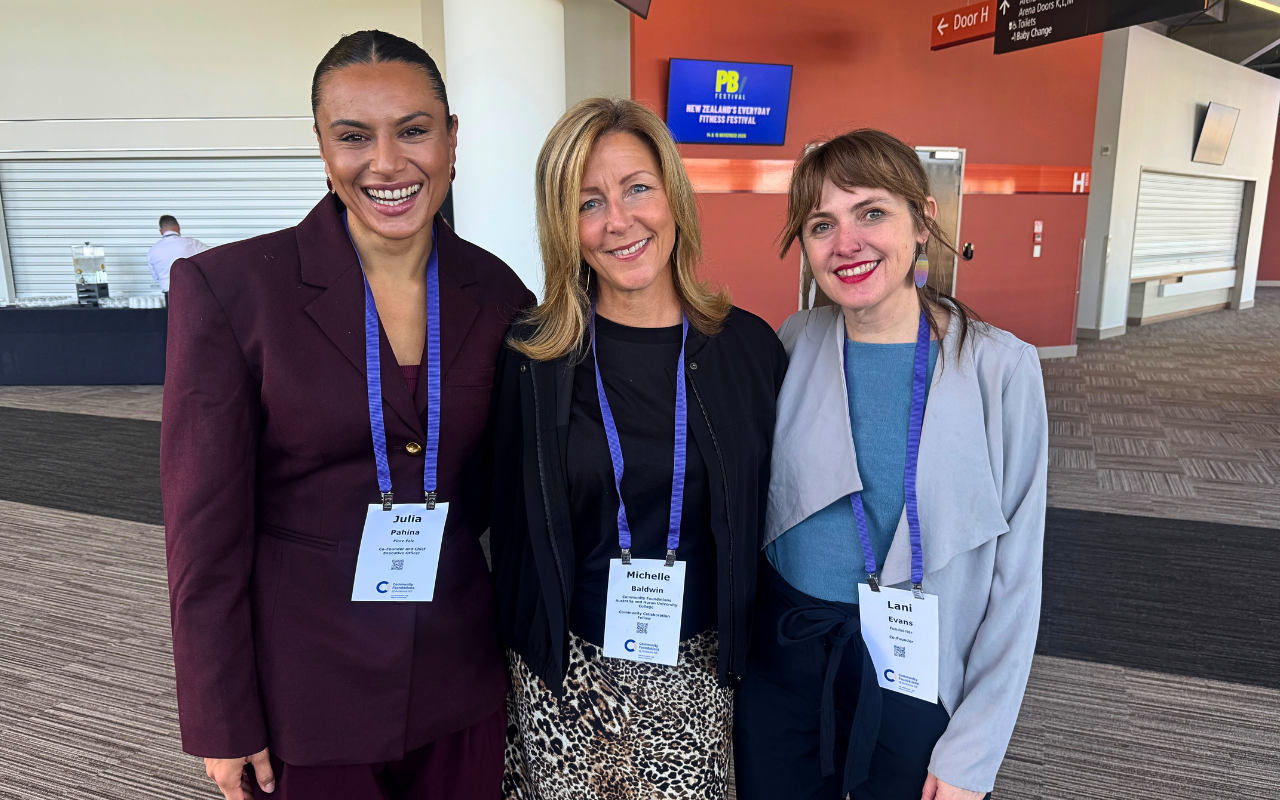
Day two opened with an exploration of what AI means for our communities, led by Julia Pahina, Michelle Baldwin and Lani Evans. The clearest takeaway was that language matters: we must resist humanising machines, keep asking who is setting the pace of this technology, and consider what we are being asked to leave behind: "AI cannot tell a community what it ought to care for; only humans can do that." The challenge to the network was to invest in local AI infrastructure rather than relying on distant, extractive models.
Drawing ducks and investment markets
A lighter moment followed when Dr Jeremy Mayall challenged the room to draw a duck - Craigs Investment Partners' Mark Lister's effort was auctioned and raised $1,200 in support of Fibre Fale, an organisation creating pathways into technology for Pacific people.
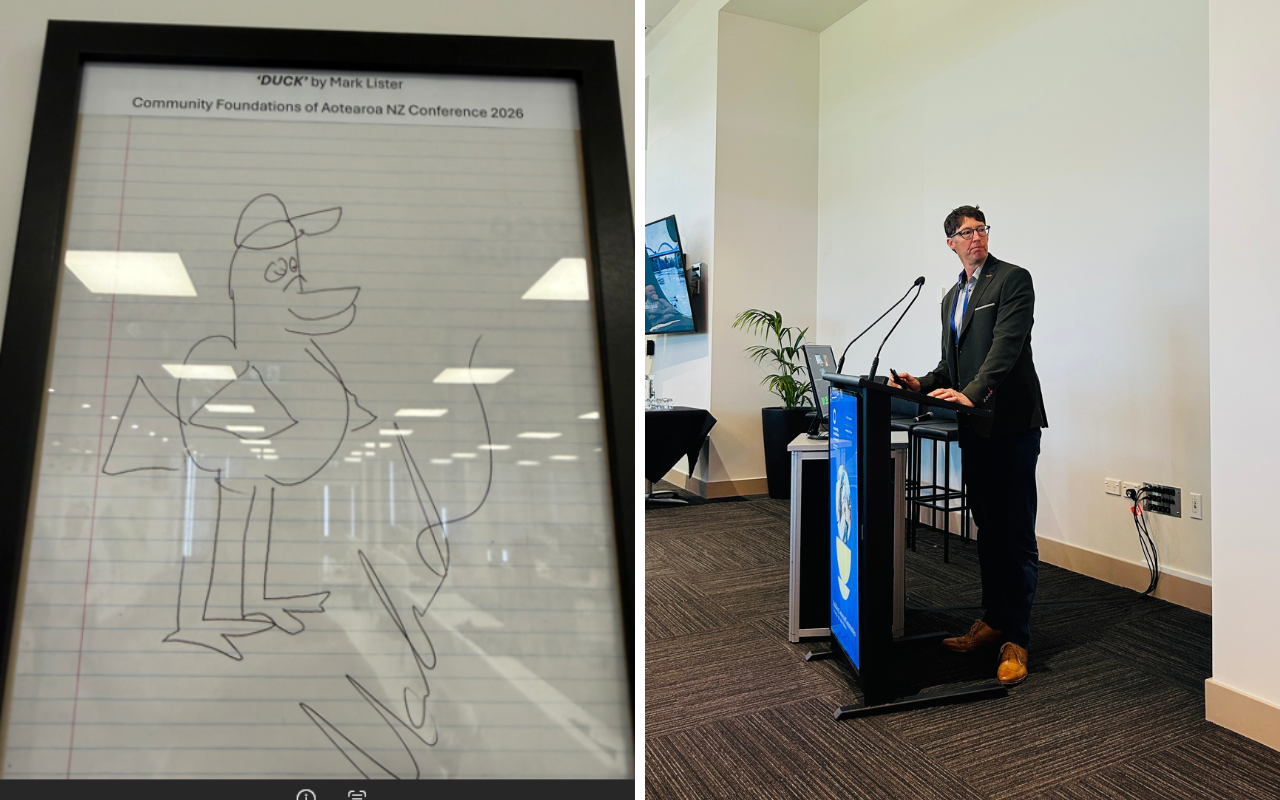
There was something genuinely connecting - perhaps because it was more than a tad ridiculous - about a room full of adults drawing ducks together. Mark Lister then gave a market update, a timely reminder of how exposed investment markets are to outside shocks and the importance of portfolio diversification in volatile conditions.
Impact investing
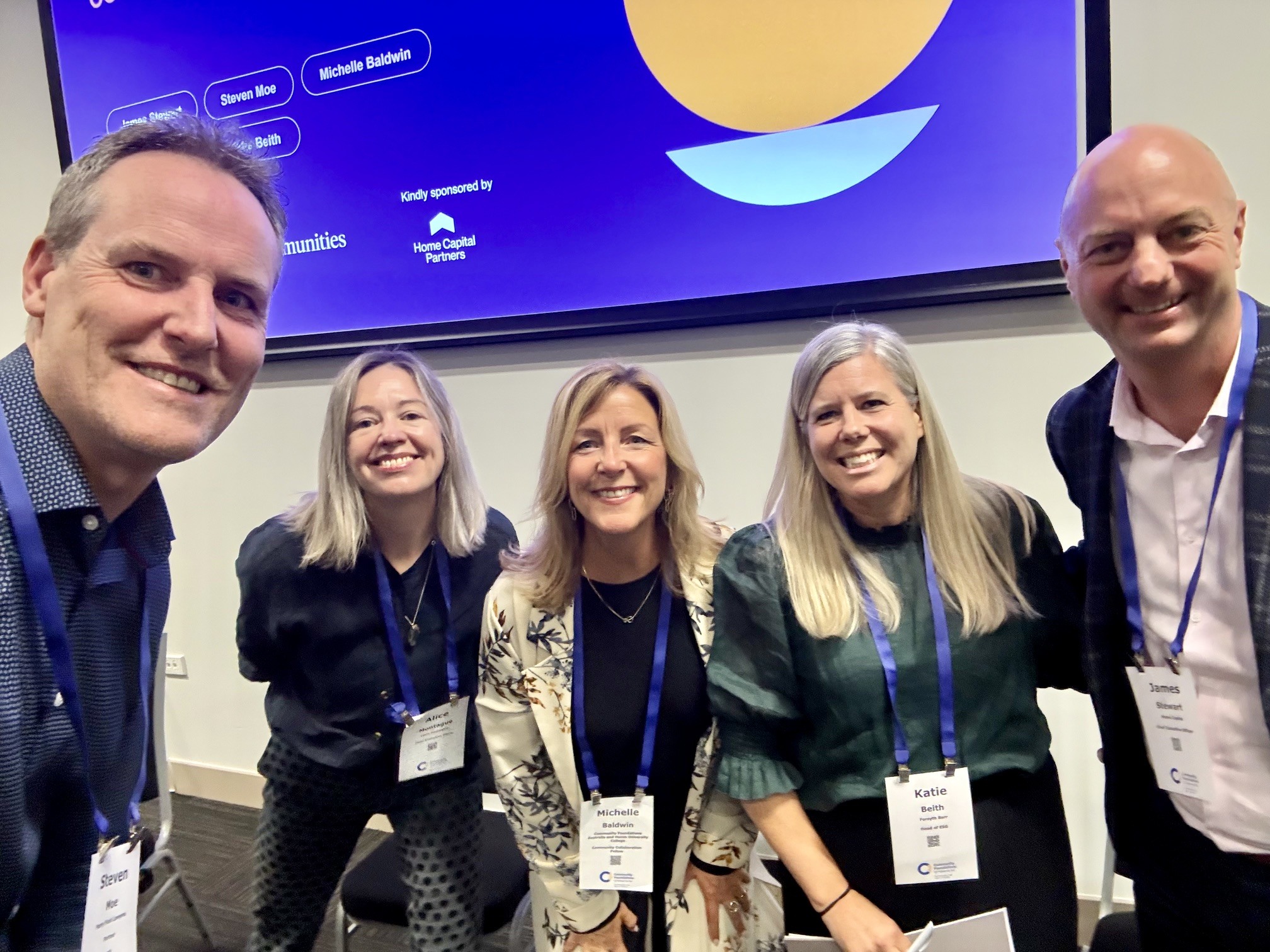
In one breakout session a powerful question was explored - how are we mobilising our assets to do community good? This session, led by lawyer and community champion Steven Moe, revealed where the opportunities lie to mobilise collective assets to support ‘New Zealand Inc’, beyond traditional grant making. Can New Zealand's community foundations shift their collective mindsets, from maximising market returns for grant making, towards investing in community impact? Steven also produced a Community Foundations Impact Investing Guide for community foundations which can be downloaded here.
Nonlinear growth
Michelle Baldwin shared how the Australian network has been exploring community foundation life cycles as nonlinear - a matrix of emergent, growth, durable and renewal states rather than a single trajectory - along with a game Community Foundations Australia has developed to help foundations explore their messy yet wonderful evolution.
Facing the climate emergency
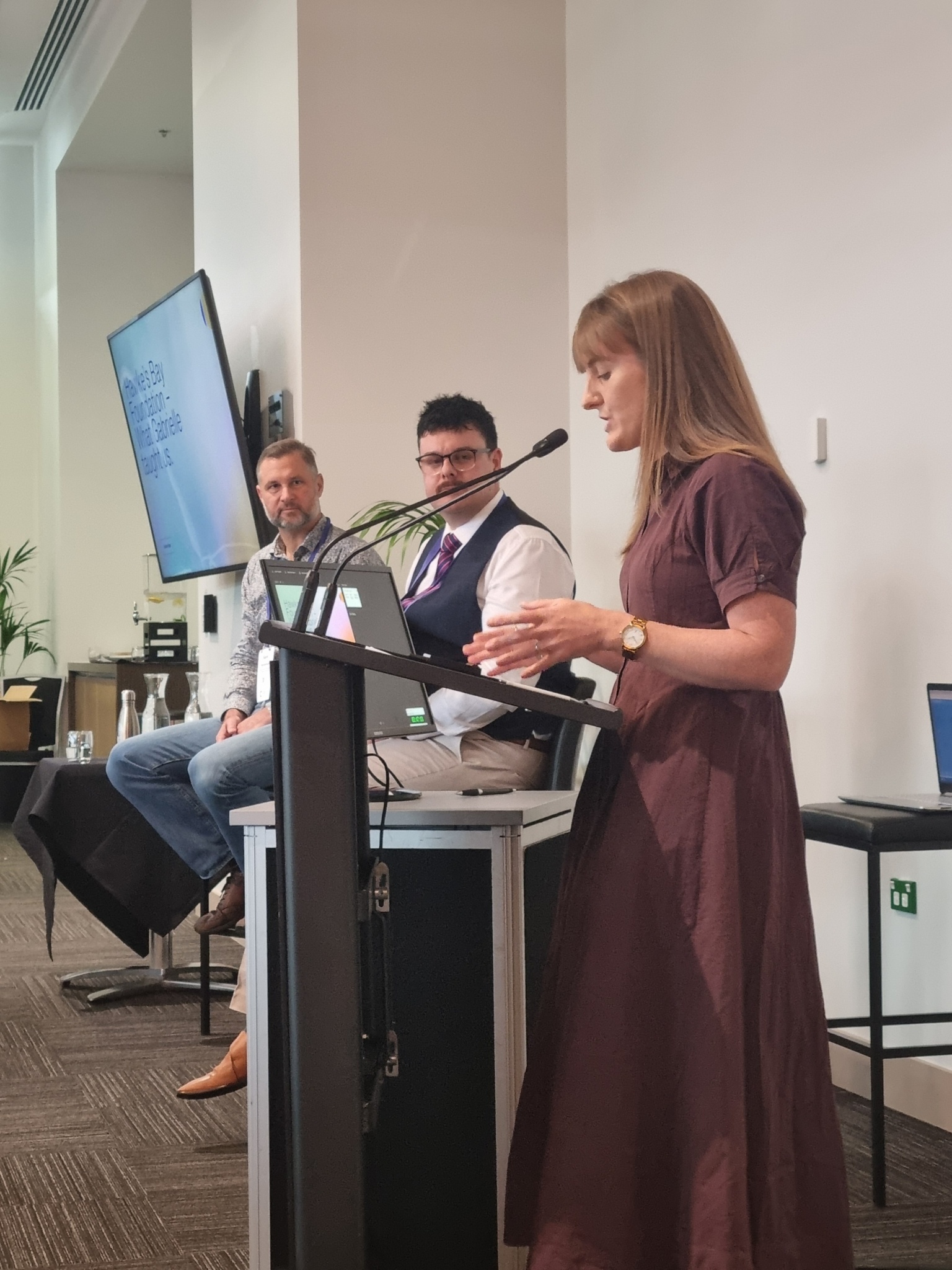
Grant Blackwell, Chief Scientist at the Climate Change Commission, brought sobering figures: New Zealand spends $4 billion a year responding to climate emergencies, with 97 cents of every dollar going to response and recovery and only 3 cents to mitigation and resilience, as the country now faces an emergency roughly every eight days. His advice included building the capacity of marae, iwi and hapū to lead local adaptation and resilience. Sam Henderson of Northern Rivers Community Foundation echoed this from Australia's experience of flooding, emphasising flexible, ready-to-move funding and investment in community capability.
Where power sits
Georgia Mathews of Community Foundations Australia closed the conference with a provocation: where was the conversation about shifting power and building movements? It's a fair challenge. Shifting power to the grassroots of communities has to be central- and named - in what local community foundations do, particularly in the context of a colonised nation.
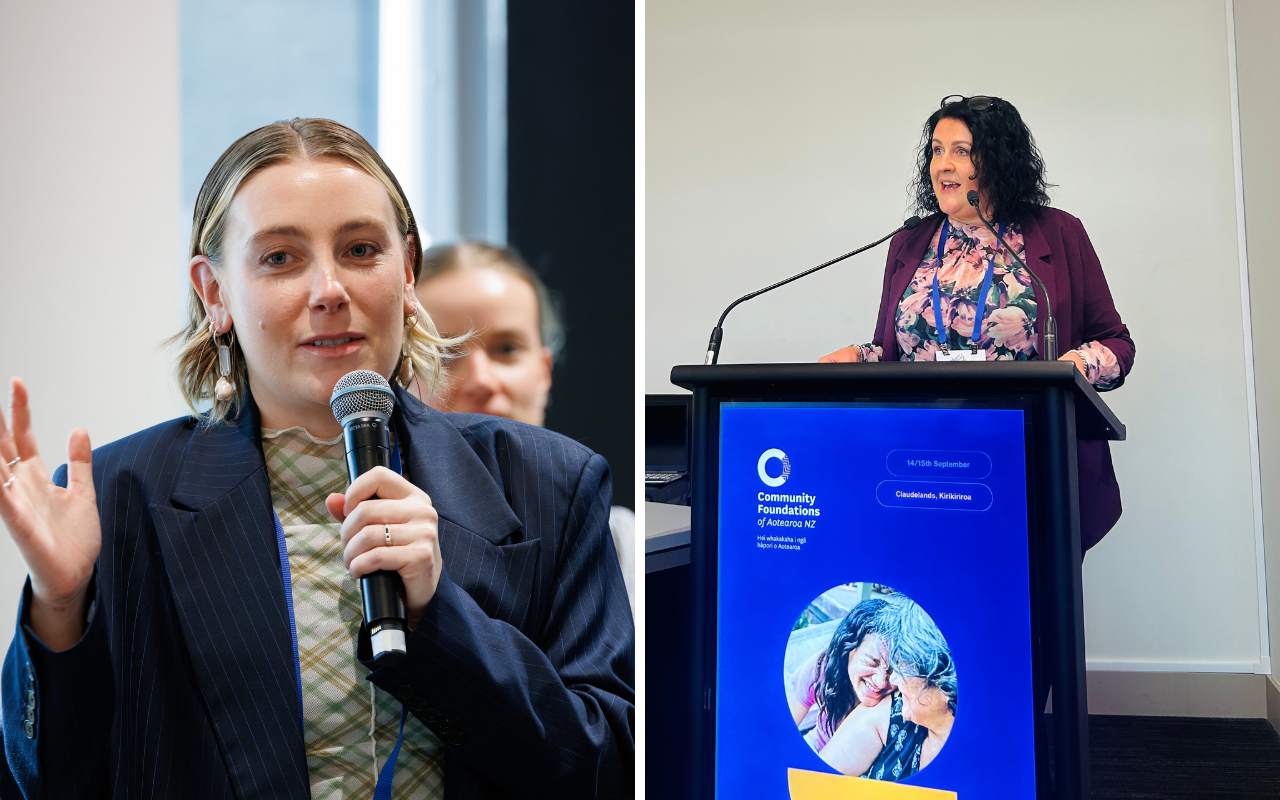
New CFANZ Chair Emma Lewis put the same question to us in a different form: are we courageous enough, as a network, to imagine a future of genuine collective impact and true Te Tiriti partnership? That has to be central to the mahi of the decade ahead.
A new era is beginning, and the shape of it is largely ours to decide. Thank you to everyone who shared, challenged, funded and built alongside us at this year's CFANZ conference, we all return mentally energised for the decade ahead.
Thank you to our conference sponsors:
Lead Conference Partner - Craigs Investment Partners
Major Conference Sponsors - Forsyth Barr and Glenice and John Gallagher Foundation
Conference Sponsors - Acorn Foundation · Alliance Magazine · BNZ Foundation · Fonterra · Hamilton City Council · Hamilton Gardens · Home Capital Partners · Len Reynolds Trust · Momentum Waikato Community Foundation · Raw Potential · The Tindall Foundation · Trust Management · University of Waikato · WEL Energy Trust.
Date Posted: 17 Sept 2026
Recent Posts
Turning lifetimes into legacies
21 Sept 2026
Chris Thomas left his estate to Nīkau Foundation in 2022 to fund conservation work indefinitely...
Read moreWhat holds us together: cohesion, courage and the shifting of power
24 Sept 2026
Every second year our national conference gives us a chance to step back from the daily work of running a peak body for community foundations and ask some bigger questions: what does Aotearoa New Zealand need us to be ....
Read moreWhy your will is about more than your assets
17 Sept 2026
A will decides who raises your children if you can't, and how much certainty your partner has if you're not married. It also decides how much control you get over when your kids actually inherit. Arron Perriam, who advises families on philanthropy and intergenerational wealth at Craigs Investment Partners, walks through why that planning matters. Read it before your next conversation with your lawyer.
Read more